
Jev AI explained: smarter engineering test triage
Updated 24 September 2026
Source-checked: 24 September 2026.
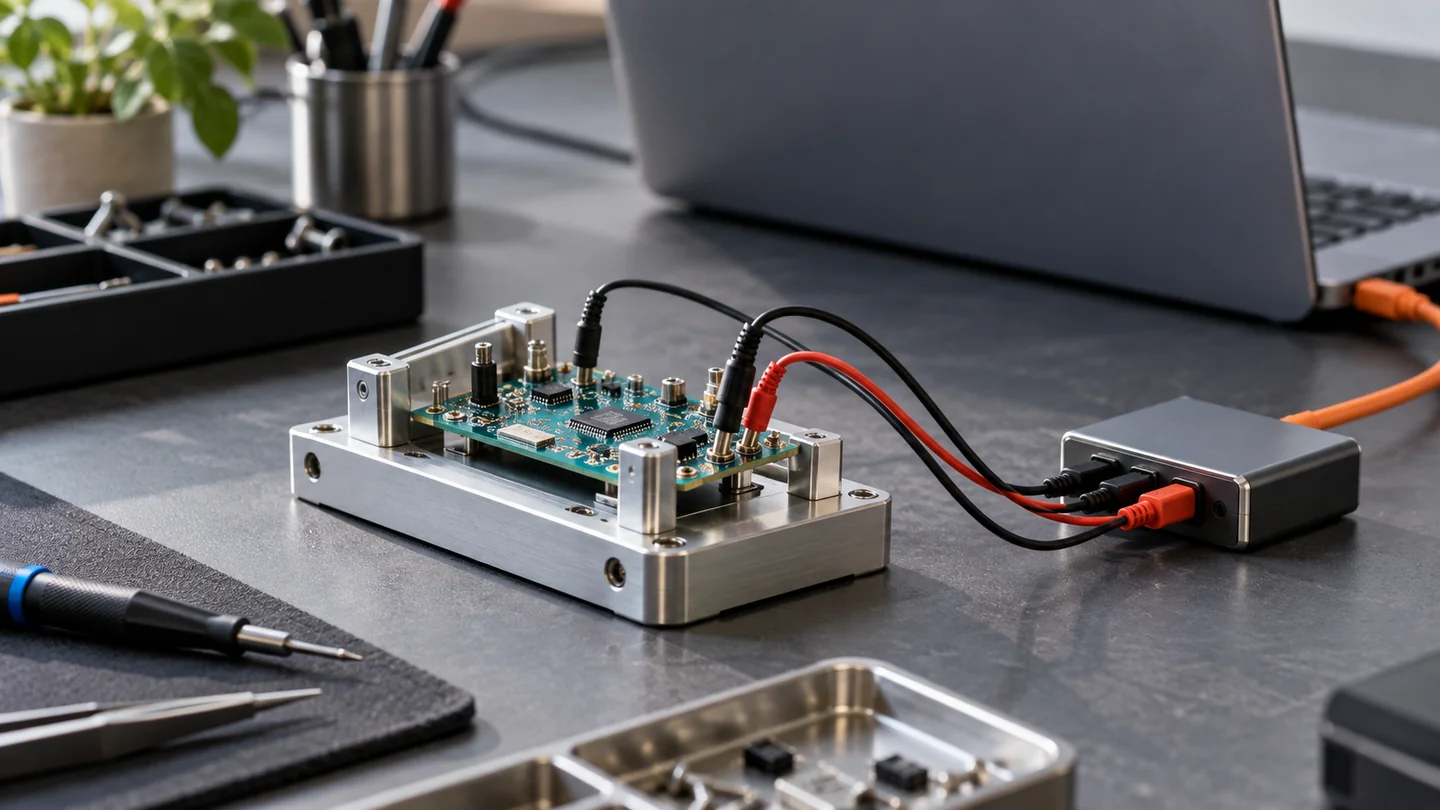
Jev is worth understanding if your software needs a focused judgement rather than another paragraph. It returns constrained decisions that an application can use for routing or scoring. For an engineering team, a useful first experiment is sorting test failures into review queues, while leaving the original result and release decision untouched.
What is Jev AI?
TypeSafe announced Jev in early access on 15 September 2026 as its first public System One model. The original announcement describes a model designed for structured decisions. This is a different role from a general-purpose assistant that writes explanations, documentation or code.
The current model reference lists Jev 1.13 with the versioned identifier jev-1.13.0. Its latest alias can change as releases arrive. For an evaluated workflow, record the returned version and control upgrades so a model change does not silently invalidate your routing thresholds.
Three kinds of answer, in plain English
TypeSafe defines three primitives: Choice selects from supplied options; Score evaluates against a rubric; Noul expresses a yes/no proposition as a value from zero to one. Choice and Score also provide probability distributions and a confidence field. See the official introduction.
- Choice: which review queue best fits this failure record? Possible categories might include fixture, communications, firmware and insufficient evidence.
- Score: how complete is this failure report according to a rubric your team has defined?
- Noul: does the supplied record indicate that a communications timeout occurred? This is a judgement about the record, not a direct measurement of the device.
Keep each question narrow. Asking a model to decide whether an entire product is safe or ready for release combines too many different responsibilities. A bounded category is easier to evaluate, and the surrounding software can retain control of the next action.
An example: triaging a failed hardware test
Imagine a low-voltage controller that fails a communications test. The available evidence includes a test identifier, firmware revision, fixture revision, timestamps and a short serial log. This is an illustrative integration pattern, not a reported test result.
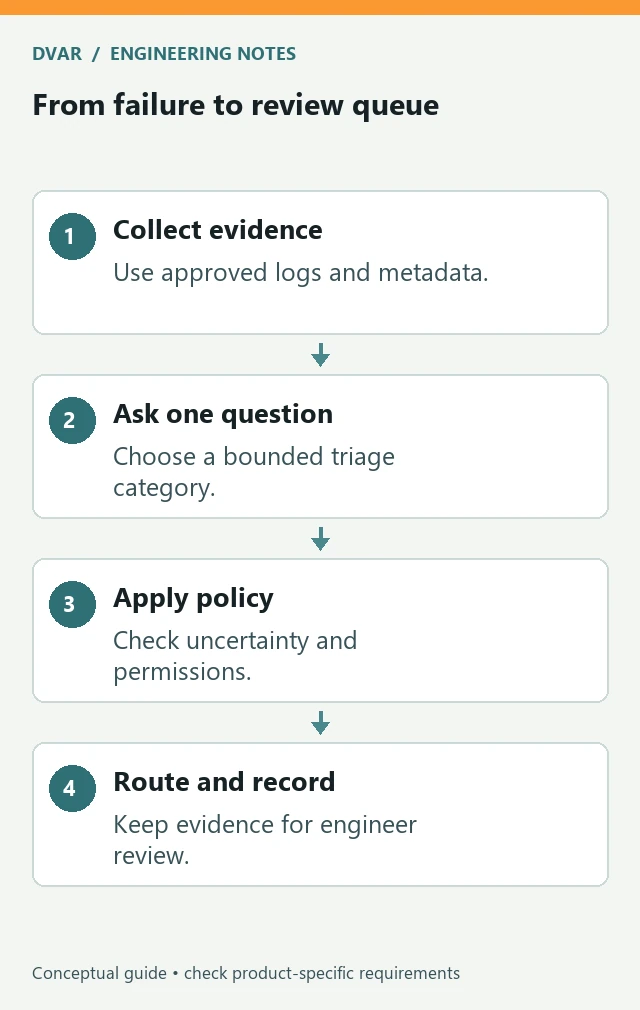
First, ordinary code checks whether the required fields are present and whether the test completed. It preserves the raw result. Next, a bounded model question suggests the most appropriate review queue from your supplied categories. The application records that suggestion separately from the original failure. An engineer can inspect the evidence, correct the category and continue the investigation.
Include an insufficient-evidence route and a deterministic fallback for missing records, service failures or unexpected responses. If the log contains instructions to ignore a failure, treat that text as evidence to inspect, not as permission to change the workflow. The routing service should have no authority to mark the product as passed.
Confidence does not mean certainty
TypeSafe describes confidence as a statistic derived from the probability distribution for Choice and Score; Noul does not include that separate confidence field. Its guidance recommends selecting thresholds for the particular task. Read the confidence documentation before interpreting the output.
Do not read a confidence value of 0.9 as proof that this particular diagnosis has a 90% chance of being correct. TypeSafe’s System One explanation distinguishes calibration across groups of predictions from correctness of an individual answer. A valid category can still be the wrong category.
For a trial, choose thresholds using labelled records that resemble the real workflow. Measure which failures are misrouted, which are escalated and how much correction each queue needs. Review rare but consequential errors separately. A high overall agreement rate can hide poor behaviour on the cases that matter most.
Know where a different tool belongs
The current Jev documentation specifies text-only input: it does not directly accept images, audio or video, and it does not generate code or explanations. A PCB photograph or oscilloscope screenshot therefore needs a separate, validated extraction process before its information can enter this workflow. Those limitations are documented in the System One reference.
Use deterministic software for arithmetic, instrument limits and pass/fail comparisons against an approved specification. Use a suitable generative model when you need a draft explanation. Keep the evidence links attached so a readable explanation cannot acquire more authority than the underlying measurements.
A sensible first pilot
- Run in observation mode: suggest queues without changing existing assignments.
- Include incomplete logs, mixed failure causes and unfamiliar firmware revisions.
- Record input provenance, question definitions, model version and the engineer’s final category.
- Compare against simple rules as well as the existing manual process.
- Check data-processing terms before submitting proprietary records, and remove secrets.
- Enable only reversible, low-impact actions after the evaluation supports them.
The useful outcome is less time spent sorting evidence and more time investigating the right problem. It is not automatic proof of a root cause. DVAR’s automated test engineering and AI and ML integration services can help frame the workflow, interfaces and acceptance criteria around a real product.